
The National Labor Relations Board (NLRB) is a federal agency that handles and enforces workers’ rights, while ensuring fair labor practices are upheld. So, whether you’re part of a union, facing work retaliation for wanting better choices, or show interest in organizing your workplace, your labor rights are protected under federal laws at all times.
At Federal Employment Law Firm of Aaron D Wersing PLLC, we help employees of the American workforce understand, assert, defend, and protect their rights under the National Labor Relations Act (NLRA). Therefore, whether you’re facing union election interference, retaliation for engaging in protected activity, or dealing with unfair/unjust labor practices, we’re here to support you.
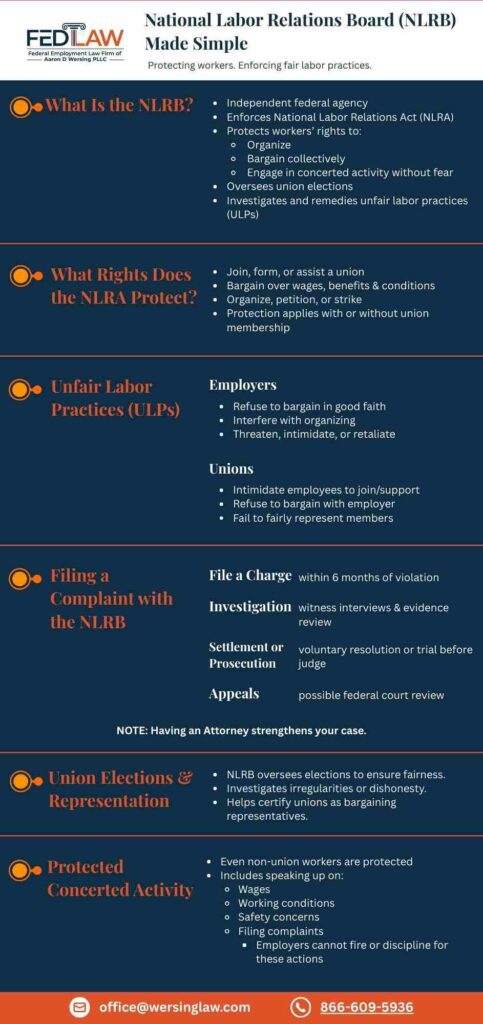
What Is the National Labor Relations Board?
The National Labor Relations Board (NLRB) is an independent federal agency that enforces the National Labor Relations Act by protecting the rights of workers to organize, bargain collectively, and engage in concerted activity without fear of reprisal. It is also in charge of investigating and remedies unfair labor practices by employers or unions and overseeing union elections to ensure fairness among the workforce.
The NLRB also has power over the most private-sector employers across multiple industries like manufacturing, retail, healthcare facilities, and more. Although the NLRB does not have jurisdiction over federal, state, or local government employees.
What Rights Does the NLRA Protect?
The National Labor Relations Act guarantees to protect the workforce’s right to a union. This could include the right to form, join, or assist a union. It can also bargain collectively through its own representatives to discuss employee wages, benefits, and working conditions. Moreover, unions are allowed to organize, petition, or strike if they feel like they are being mistreated.
It is important to realize that these rights apply to you regardless if you’re in a union or not.
What Are Unfair Labor Practices?
Unfair labor practices (ULPs) are complete violations committed by either employers or unions of the NLRA.
Labor Practices Violated by Employers:
- Refusing to listen and bargain with employees/union in good faith.
- Interfering with and condemning employees’ rights to organize or form unions.
- Threatening, intimidating, or isolating employees who participate in the union.
- Retaliating against employees for their union speech, demands, and activities.
Labor Practices Violated by Unions:
- Encouraging illegal acts, strikes, or secondary boycotts against their employers.
- Intimidating employees to join or support a union and its activities.
- Refusing to listen and reason with your employers.
- Failing to fairly represent union members and their purpose.
If, under any circumstances, you’ve experienced any of these actions, you have good grounds to file with the NLRB.
Filing a Complaint with the NLRB
The entire process of filing a complaint with the NLRB is complex and crucial to your fight. If your employer or union has violated your rights and committed unfair labor practices, you have the right to file a charge.
We’ve simplified the process under four categories:
- Filing a Charge – You must file your charge within 6 months of the alleged incident. Additionally, you must also collect as many supporting documents as possible to support your cause.
- Investigation Process – Once your charge has been received, the NLRB will investigate the claims in due process. It typically starts with interviewing witnesses, collecting supporting claims, and reviewing evidence.
- Settlement or Prosecution – There are two outcomes from filing a charge with the National Labor Relations Board:
- Resolving the issue voluntarily between the two parties; typically, a compromise is made.
- Prosecute the case before an administrative judge
- Appeals – Regardless of the outcome, you can still appeal the case to federal court.
This process will require you to have an experienced labor law attorney by your side, guiding, advising, and defending you. Getting the right attorney can make or break your case and its outcome.
Union Elections and Representation
One of the key roles of the NLRB is to oversee union representation elections to ensure a fair and honest election free from threats or coercion. Moreover, they will also investigate the election process, especially when there’s even a hint of inconsistency or dishonesty. It also helps you and your coworkers to certify a union as the official bargaining representative.
We represent employees looking to organize their workplace that is fair to both the employees and employers. Additionally, if you or your union is facing resistance or retaliation, know that the NLRB is here to help you. We will also support unions and employee groups facing any type of unfair tactics by their management.
Protected Concerted Activity
Regardless of whether you’re not part of a union, you’re still protected by the NLRB when taking actions together to improve your working conditions. This is also known as the protected converted activity, which helps speak up against unfair treatment, unsafe working conditions, discuss wages, file complaints, and more.
Notably, employers should never discipline, intimidate, or even fire employees for participating in union activities.
How Our Firm Can Help
At Federal Employment Law Firm of Aaron D Wersing PLLC, we understand and know the complexities of labor law and the NLRB process. Our team is not only knowledgeable but also experienced in handling these cases.
We also represent employees in a variety of NLRB-related matters:
- Filing and defending unfair labor practice charges
- Counseling employees on their rights
- Representing clients in union election proceedings
- Challenging retaliatory firings or disciplinary actions
- Assisting hybrid or contract employees working in quasi-public roles
We are passionate about standing up for workers who speak up—especially in industries or regions where retaliation is all too common. Whether you’re facing unlawful discipline, employer threats, or a hostile union atmosphere, we’ll guide you through every step with clarity and confidence.
Frequently Asked Questions (FAQ)
Does the NLRA apply to me if I’m not part of a union?
Yes. The NLRA protects all private-sector employees’ rights to engage in protected concerted activity—even if no union is involved.
How long do I have to file a complaint with the NLRB?
Generally, you must file within six months of the alleged violation. Exceptions may apply in certain circumstances.
Can I be fired for organizing or complaining about my job?
No. Firing or disciplining you for protected activity violates federal law. You may be entitled to reinstatement and back pay.
What if I work for a government agency or contractor?
While the NLRA does not cover most public employees, if you work for a private contractor or in a hybrid federal/private setting, you may still be covered. Consult with an attorney to confirm your eligibility.