
- Consultations
Feb 3, 2025 | By Aaron D. Wersing | Read Time: 2 minutes
AWOL, which stands for ‘Absence Without Leave,’ is a term commonly used in work settings. It refers to an employee’s unauthorized absence from their duty or workplace without prior approval. When an employee goes AWOL, it typically results in a non-pay status, as their absence has not been officially sanctioned by their employer.
It is also a common charge of discipline within the federal government.
Note though that AWOL is not in and of itself discipline, although it may lead to discipline.
A charge of AWOL can result in a reprimand, suspension, or even removal from the federal service. Being charged with AWOL is a serious matter. But it need not be the end of your career.
If your agency has charged you with AWOL, it’s imperative you find a qualified federal employment law to help represent you and defend your rights, especially if disciplinary action is proposed or imposed.
Again, AWOL means “absence without leave” or “absent without official leave.”
As with any other job, showing up for work on time is an essential requirement for federal employment.
There is no minimum time requirement for AWOL.
Although more accommodating managers may cut an employee slack for ten or fifteen minutes late, even a five-minute absence can lead to a charge of AWOL.
Several other situations can lead to a charge of AWOL:
If a federal agency wants to use AWOL as a basis for discipline, it must prove two key points of AWOL charge.
As we mentioned earlier, there are a variety of circumstances that can lead to an employee being absent.
Consequently, it is often relatively easy for an employer to prove this part of the charge.
But you can contest this point by providing evidence that you were at your place of work during the time period in dispute.
Federal managers have the right to deny personal leave requests for legitimate reasons.
However, they cannot refuse your leave for discriminatory reasons or for retaliatory reasons.
Supervisors can also revoke their authorization of a leave request, but it also must be for appropriate reasons.
It is not unheard of for retaliatory managers to grant an employee leave, revoke it at the last minute, and then try to charge an employee AWOL.
If you think your leave was revoked because you made a complaint, you may be eligible for compensation.
A qualified employment attorney can help you demonstrate the connection between your protected activity and any retaliatory activity (including the cancellation of leave).
Call Us (866) 626-5325 – Get a Case Review
* Required Fields
The phrase “standard of proof” refers to the level of evidence the government needs to have to succeed in its case against the federal employee.
There are four standards of proof:
The “beyond a reasonable doubt” standard of proof is the most stringent standard and is not used in administrative charges like this.
The “substantial evidence” standard is the easiest standard for a party to meet.
For most disciplinary actions against federal employees, the “preponderance of the evidence standard” applies.
To meet a “preponderance of the evidence” standard, the government provides enough evidence to show the judge that there is a greater than 50% chance that the alleged misconduct—a period of AWOL, for example—actually occurred.
The number of AWOL charges before termination depends on severity and policy. A single AWOL offense can lead to proposed removal if severe enough, especially for federal employees. Repeated offenses increase termination risk. Agency policies and past disciplinary records influence outcomes.
There are a few common defenses employees can assert to AWOL charges.
First, the employee can allege that the government’s charge is based on some kind of discrimination.
The law prohibits many kinds of discrimination in the federal workplace, including discrimination based on race, gender, sexual orientation, religion, national origin, and disability.
At first glance, you may not think that any of these apply to you.
However, it is helpful to take a moment to consider whether any of your colleagues have been in your situation.
For example, do you know a colleague of a different race who showed up late to work one day but was not charged with AWOL?
Has your supervisor treated you worse than other colleagues of a different sexual orientation or gender?
Are you charged AWOL every time you ask for leave to see your doctor for medical appointments?
Think carefully—workplace discrimination can often show up in subtle ways.
Many federal employees are veterans of the armed forces. Some of these veterans retire before they enter federal service. Others are reservists.
The law prohibits federal employers from discriminating against a reservist because of their reserve duty requirements.
Similarly, if a federal employee who is also a reservist is called into active duty, they cannot be marked as AWOL.
If your supervisor marked you as AWOL after you were ordered to active military duty, you might be able to sue them for military discrimination.
Most private-sector employees have few due process rights. This means their employer is free to punish them without notice and without providing them any opportunity for rebuttal or defense.
Thankfully, United States Code guarantees federal employees due process once they complete their probationary period. Agencies must provide notice and a chance to respond before disciplinary action. Employees often have the right to union representation and can appeal AWOL decisions through official procedures.
As a result, your employer generally cannot simply fire you or punish you for being AWOL. Instead, they generally have to provide you with:
Without these protections, any adverse action taken against you can be thrown out for violating your rights.
If your federal employer has charged you with AWOL, it’s easy to feel overwhelmed.
You may feel tempted to simply “roll over” and accept the agency’s punishment, but you shouldn’t.
Take a stand instead. Fight for your rights and for your federal career. Our experienced attorneys are ready to assist federal employees nationwide.
At the Federal Employment Law Firm of Aaron D. Wersing, PLLC, we care about your well-being and your future.
We want to sit down with you and listen to your story. Once you have told us the facts of your case, we can give you your legal options.
No matter what you decide, we will spare no expense to fight for your rights.
That means you have nothing to lose by sitting down with us and sharing your story. Call us at 833- 833-3529 or contact us online.
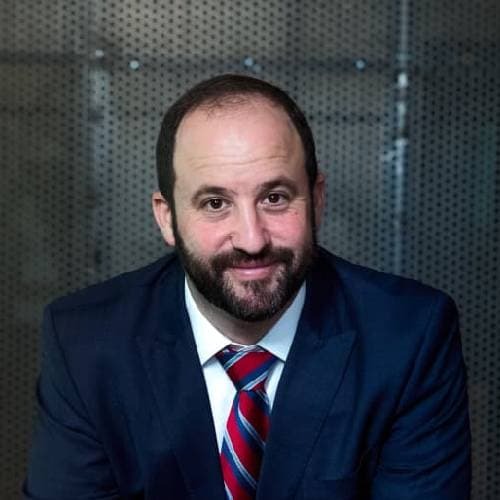
Aaron Wersing is the founder of the Law Office of Aaron D. Wersing. Mr. Wersing graduated from the Georgia State University College of Law with a Doctorate in Jurisprudence and was the recipient of the CALI Excellence for the Future Award. Mr. Wersing previously attended the University of Georgia, where he received a Bachelor of Business Administration degree in Accounting. Mr. Wersing is an active member of his local community. Mr. Wersing acts as a volunteer attorney with Houston Volunteer Lawyers, the pro bono legal aid organization of the Houston Bar Association. He is also a member of professional legal organizations such as the National Employment Lawyers Association and the American Inns of Court. To reach Aaron for a consultation, please call him at (866) 576-6349.